
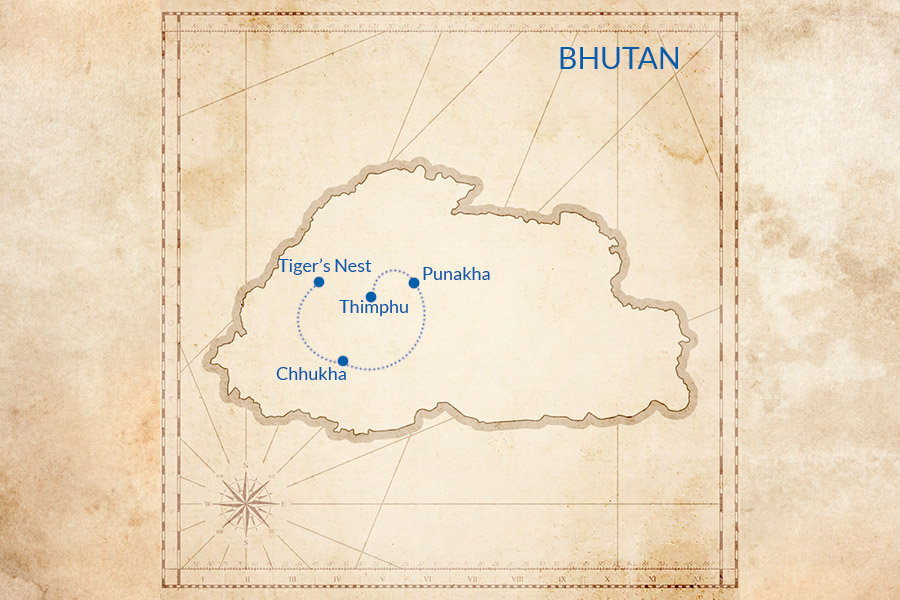
From a plane things tend to look less impressive. Not this time. The Himalayas are impressive even from above. As you land in Paro, the sense that you have indeed hopped over giants and landed on a Hidden Kingdom is strong. There is a uniqueness to Bhutan that is no hyperbole. An hour’s drive away from Paro, the city of Thimphu is a peculiar mixture of ancient and modern. This is no ordinary country, and just how deeply history, religion and culture are intertwined, well… you have a whole journey ahead of you to find out.
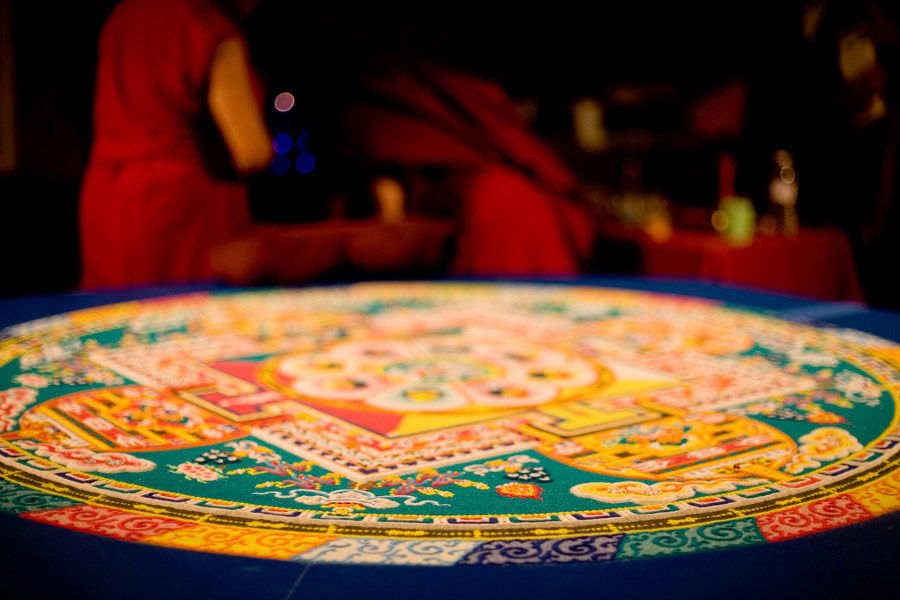
You begin your morning with a cleansing ceremony and then participate in creating a mandala. You soon discover that making them takes a lot of skill. You know what will happen with this beautiful creation, but you allow yourself to hope that perhaps, something so precious will surely remain forever, just this once! The monks continue working on the mandala while you learn about Bhutanese Traditional Medicine. Here you discover how Buddhist cosmology has influenced healing practices in Bhutan, and also how the elementals are represented through colours. According to your personality traits, you are given a colour, and with it, you will find a deeper connection to the land and to yourself. The monks are putting the finishing touches on the mandala and then, the inevitable happens.
Your time in Thimphu has given you a greater introspection. As you summit Dochula pass on the way to Punakha, the Himalayas on the distance are awe-inspiring, and you get a glimpse of connectedness. It is a sudden realisation, as Waldo-Emerson put it: “nature always wears the colours of the spirit.” You visit the temple of the Divine Madman, a 15th century lama who had a rather radical approach to Buddhism. He is the one who inspired the Bhutanese to paint phalluses on their walls.
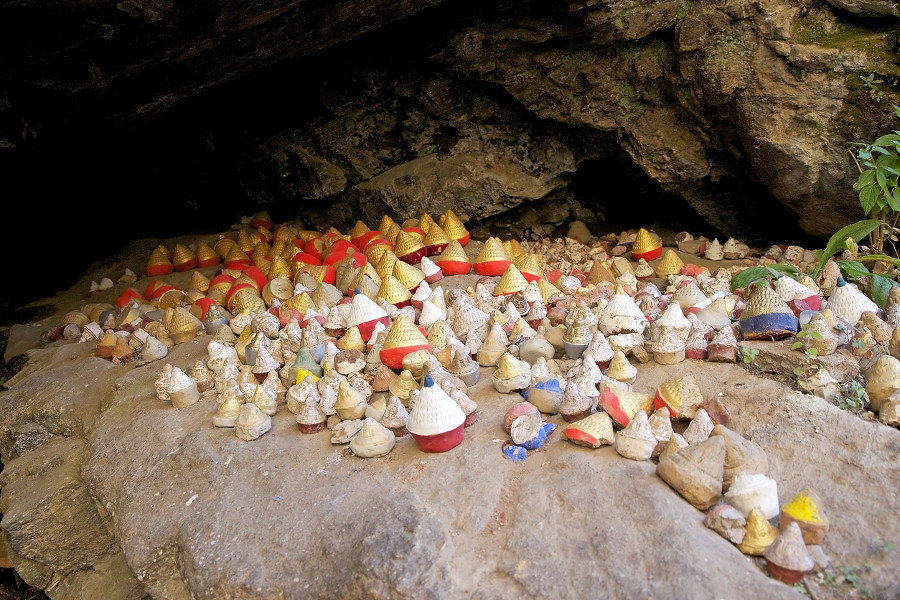
Punakha contains some of the finest examples of Dzong architecture. Here you learn about some of the non-Buddhist traditions that have remained since ancient times. Fortunately, your guide, Mr. Sangay and one of Andrea’s most colourful friends so far, is a perfect interpreter and you learn all about the serpent deities. The making of Tsa-tsas is an important practice in Buddhism. You learn all about it from a senior monk and make your own. It is an offering to benefit a suffering soul, or to enhance your own inner force. There is another offering left for you to make in Punakha: hoisting a flag. As your elemental colour dances in the wind, it strikes you as a perfect representation of your inner life, becoming open to the universe.
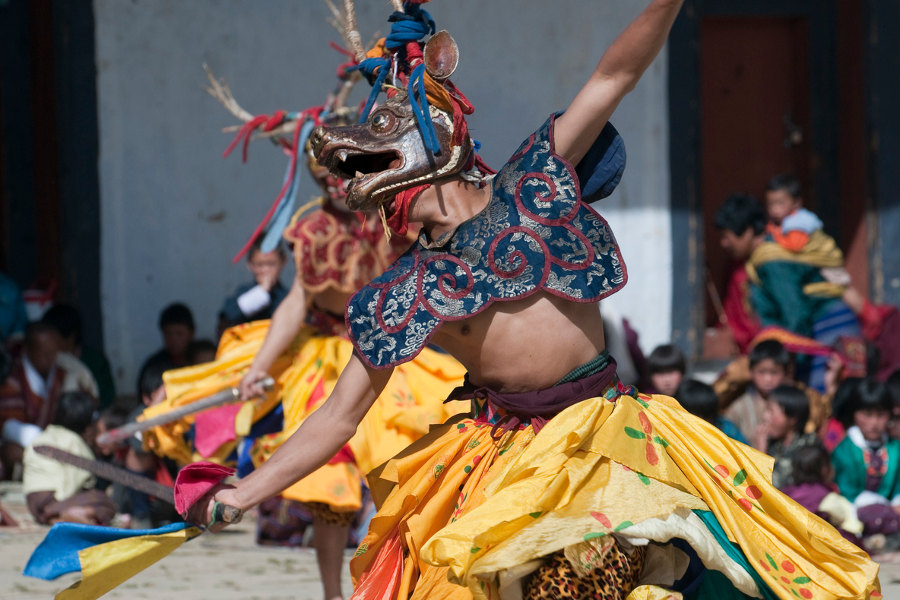
The drive south to Chhukha reveals the variety and enormous range of Bhutanese nature. You arrive in time for the festival and witness Bhutanese Culture in all its nuances. Chhukha is a very diverse region and historical elements mingle with religious ones. In the colourful dances you see the pride and the meaning that culture brings to everyday life. In the fearsome masks of the performers you find the representation of the natural and the divine, and feel that you too participate of its power. The Atsaras, or clowns, mock the monks and their religious solemnity. Their role is that of carnaval. And in that way, among the spiritual and the sublime, you rediscover the human.
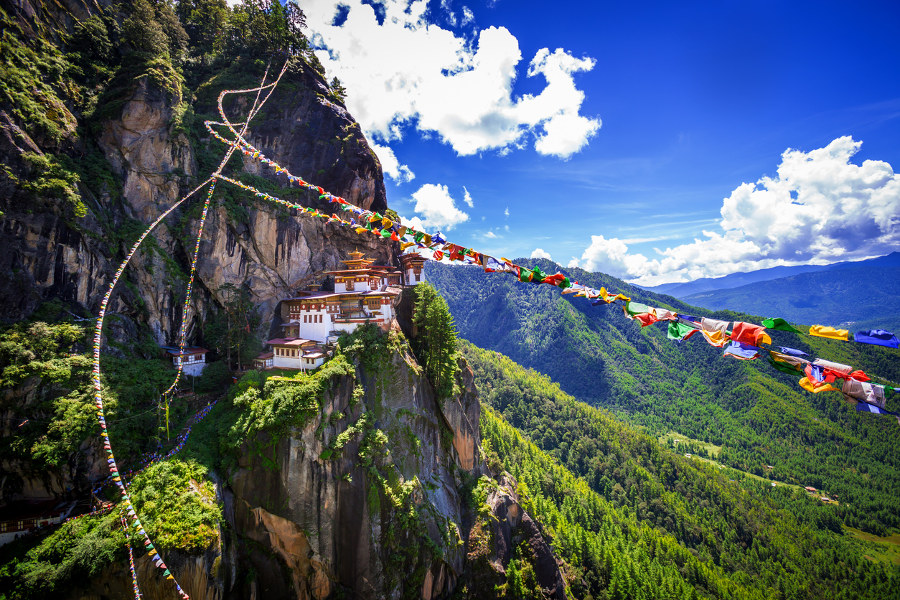
There is one last excursion you must make. The hike to the Tiger’s Nest is difficult but you manage. The temple, nestled by sheer cliffs, is one of the holiest places for Bhutanese Buddhists. In the last days, your mind has become attuned to the images, the landscape and the culture. Leaving Bhutan will be a difficult farewell.
Provide us with a few starting details about your travel plans, and one of our specialists will be in touch to give you suggestions and ideas.