
The view of the Himalayas from the plane was breathtaking. It is not often that you can write a highlight on your traveller’s journal before the actual trip has begun. The moment you land in Paro, you feel that you have traversed a barrier into a Hidden Kingdom nestled by the giants of this Earth. You meet your guide, Mr. Sangay, and you soon discover that he is surely one of Andrea’s most colourful friends. It comes as no surprise that he has pursued the study of colours, and their symbolic meaning in all aspects of Bhutanese culture. The drive to Thimphu is a pleasant one. The countryside is lovely, and you can see the effect that Bhutan’s conservation policies have had on protecting the environment.
Your day begins with a purification ceremony. After breakfast, you partake in a mandala offering. Before your eyes, Buddhist monks work dyed rock powder to create art. They are masters in their craft, and the beauty they create is inspiring. You have a go at your own mandala. It is not a masterpiece but your intent and effort have gone into it. It will be painful to see it destroyed. You leave the monks, who are still hard at work. Bhutanese Traditional Medicine draws from the wisdom of experience, and a Buddhist worldview. Colours, Mr. Sangay points out, play a role in it. Here, expert practitioners and healers analise you thoroughly and tell you your elemental colour. Through it, you will connect with the spiritual and cultural forces in Bhutan.
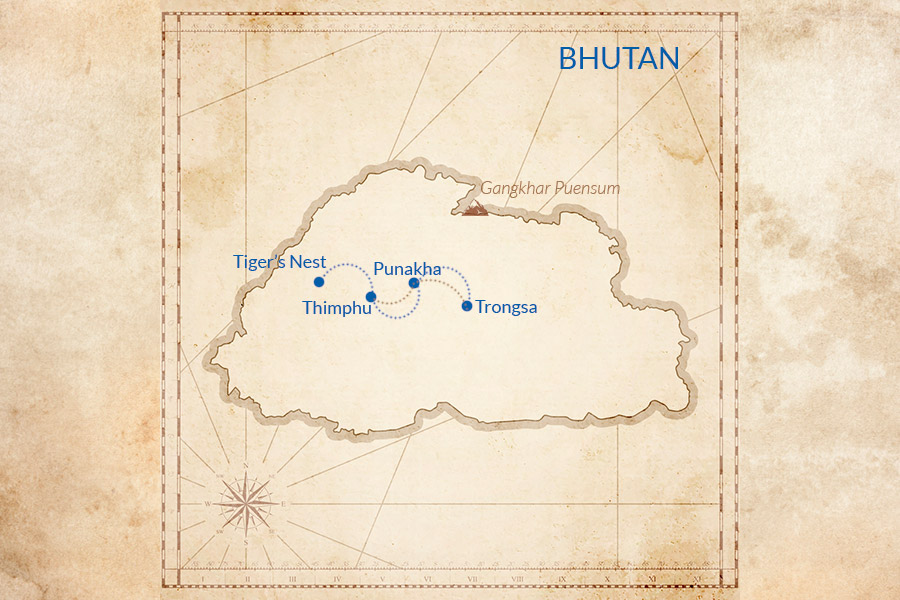
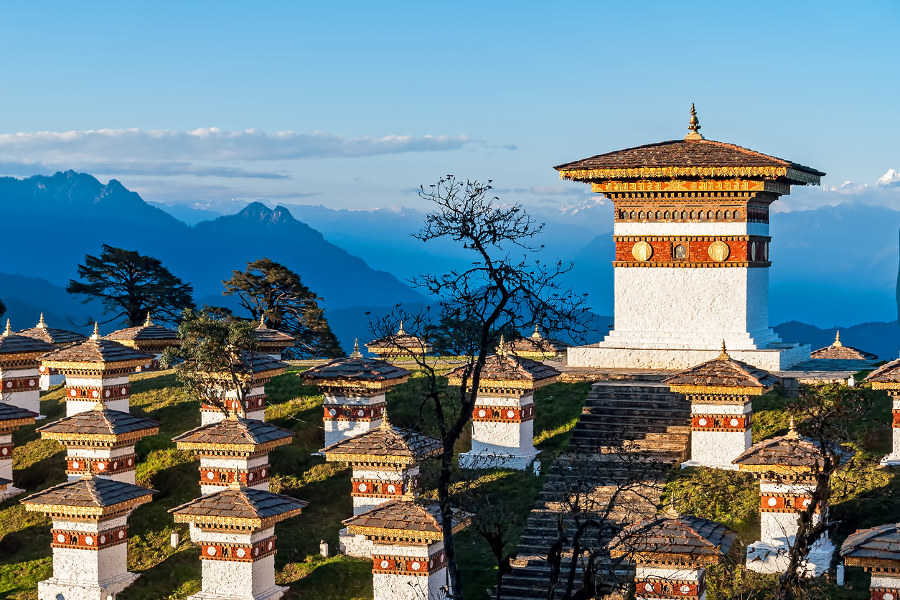
You spend another day in Thimphu before venturing into the countryside. Most of the day is spent at Paga temple, where you pray and meditate with the monks and learn the role that colours play in astrology. In this hands-on experience, you have your own altar where you can offer old cloths, and see how the Bhutanese have fended off evil spirits and illnesses since ancient times. It is time to leave the capital. On the drive to Punakha you must first ascend Dochhula pass. From here, you get a view of Bhutan’s highest peak: Gangkhar Puensum. It is a disputed fact, but it appears that it remains the tallest unclimbed mountain. You cannot explain why, but that fills you with awe.
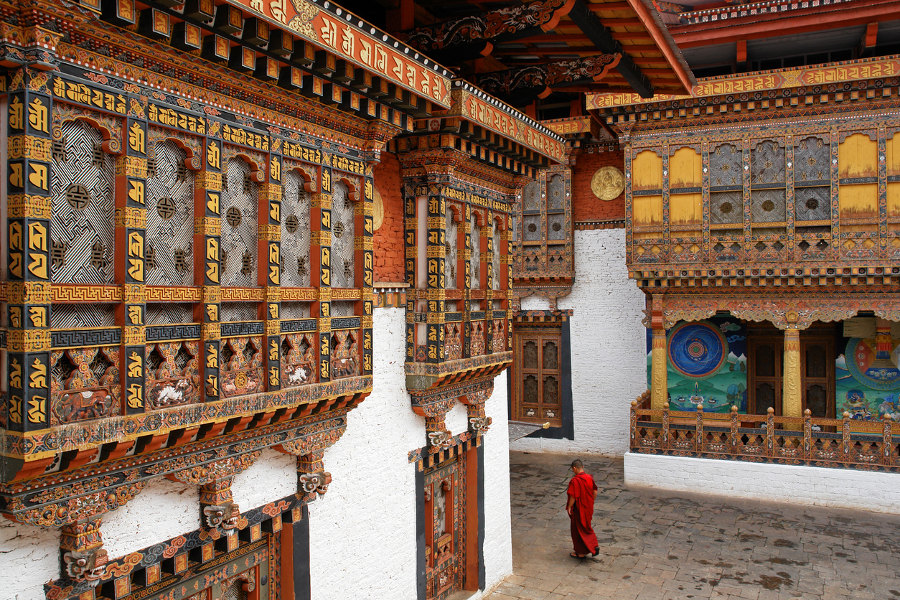
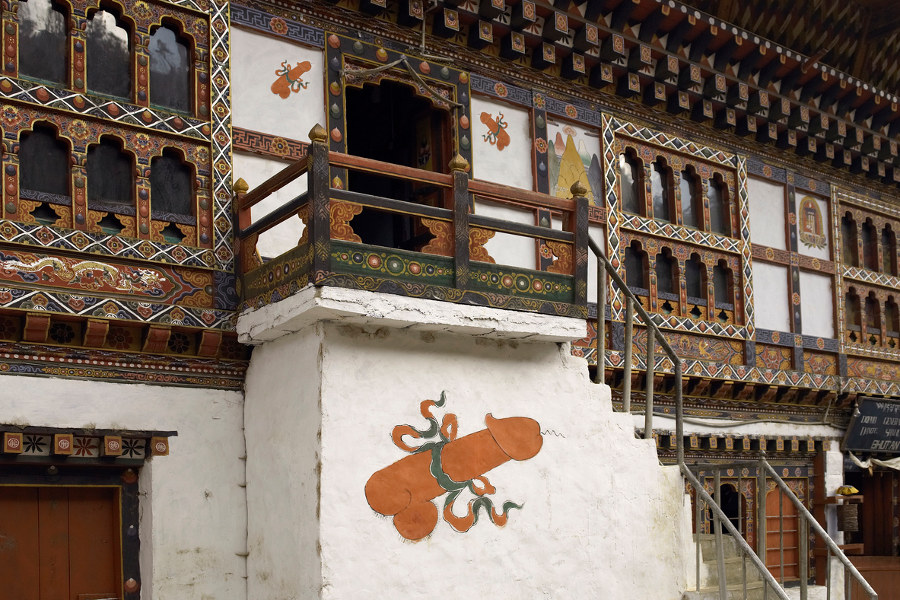
In rural Bhutan, it is common to find phallus paintings on the walls of houses and buildings. This is a curious sight for visitors and a contentious domestic issue. If anything, it is a sign of Bhutan’s unique culture. You visit the Temple of the Divine Madman and learn once and for all the meaning behind these charming designs. The deeper you go into the country, the more treasures you discover. On the drive east to Bumthang, you ascend a mountain pass and discover the beautiful Chendebji Chorten, a type of stupa that with glaring eyes is tasked with keeping demons at bay. Hopeful that it does its job well, you plunge from the heights into Eastern Bhutan. Trongsa Dzong is one of the largest Dzong buildings. As you walk within its walls and learn about its historical importance, your imagination awakens with childlike enthusiasm. It really is as if you had discovered a Hidden Kingdom.
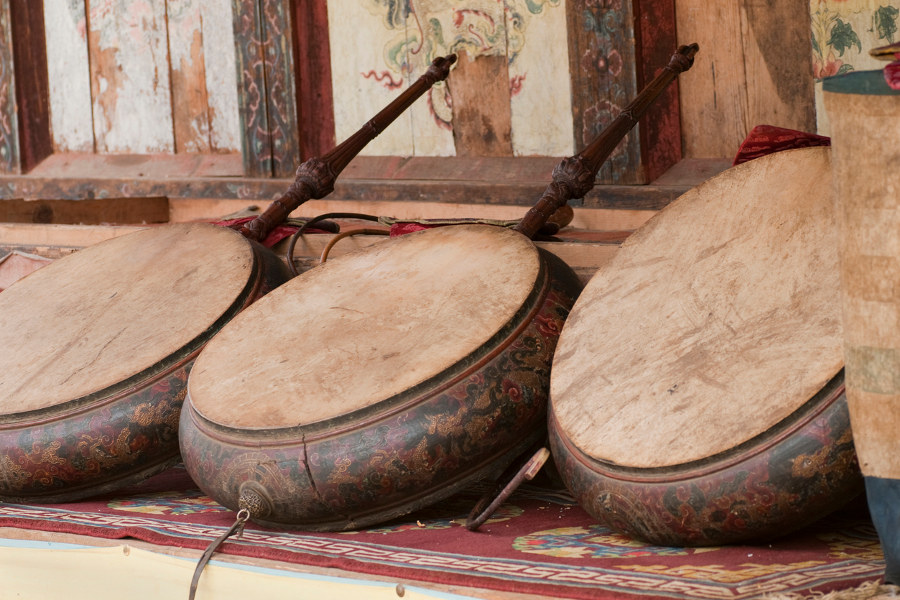
A Chöd Ceremony is meant to “cut through the ego”. The imagery is unsettling and to be honest a little upsetting. But the purpose is clear, to remind oneself that existence is but an illusion. It is an idea perhaps akin to that of the Danse Macabre. Chöd implies offering one’s flesh for demons and gods to feast on. The ceremony becomes more intense with the beating of drums and the colourful imagery. Surely, you won’t soon forget this day. You settle for a session of Tsenyid, and hear monks debate their Buddhist learnings. However, the Chöd is fresh in your mind.
The intense days in Eastern Bhutan are over. As you travel back to Punakha, you get a glimpse of the agricultural and natural treasures that Bhutan fosters. As a policy, 70% of the country must remain covered by forests. You resume your spiritual journey while you witness an ancient ritual. In Bhutan, many worship serpent deities, and believe that they are the true masters of the world. Farmers make offerings to these beings, as a way to live in harmony with them. You make an offering of your own, a Buddhist one though, with a tsa-tsa, a small monument made out of flour. It will be eventually thrown into the river and thus feed the life in it.
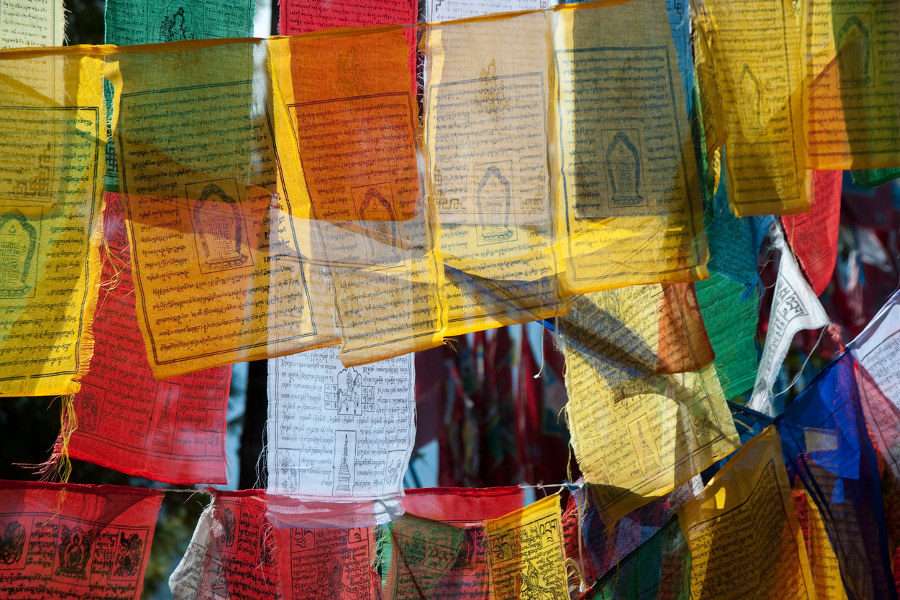
The final leg of the journey begins with an iconic ceremony: hoisting a prayer flag. Yours is of your elemental colour. It blows in the wind and in a symbolic way, it spreads your good wishes, and something of yourself into the world. On the way back to Paro, you stop at Sisina, a farmstead where you are received as a guest in the traditional Bhutanese way. You also stop by a beautiful temple on the other side of a metal suspension bridge. During these last days, you have discovered an ancient culture that is unique, you have delved into your inner world and found many things about yourself that had remained unknown. However, some doors must remain closed. This small temple is out of bounds for outsiders. It is a mystery that will remain hidden, and you are fine with it. It is charming in some strange way.
The Tiger’s Nest is the last highlight in this journey. It is a famous sight: a beautiful temple, nestled in the mountains, hanging to sheer cliffs. You are not the same person that landed in Bhutan eleven days ago. As you calmly contemplate the imagery and the landscape around you, you are filled with a sense of connectedness. Little by little, Bhutan has become a part or you.
Provide us with a few starting details about your travel plans, and one of our specialists will be in touch to give you suggestions and ideas.